Spring Refresh: Resetting Play, Energy & Expectations

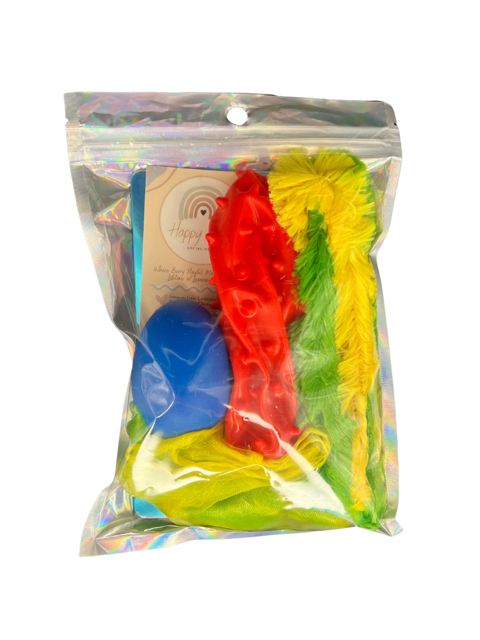
Hop Into Spring Play Kit Filler
March always brings that feeling.
The urge to open windows.
Donate toys that haven’t been used in a while.
Clear out closets.
Start fresh.
… but what if this season we refreshed something even more important?
Our children’s play.
In our home and classes, we believe play is not just entertainment, it’s brain development, emotional regulation, confidence building, and connection. And sometimes the most powerful reset doesn’t require buying anything new.
It simply requires clearing space.
Refresh the Play Space (Without Buying More Toys)
One of the biggest misconceptions parents have is this:
“If I had better toys, my child would play better.”
But in reality?
Too many toys overwhelm the brain.
When children are faced with endless flashing, singing, battery-operated options, their attention fragments. They jump from toy to toy without going deep. The result? Shorter focus spans, more frustration, and more “I’m bored.”
Instead, try this simple Spring Refresh:
Rotate Instead of Replace
Put away 60–70% of your child’s toys for two weeks. Store them out of sight. Leave out:
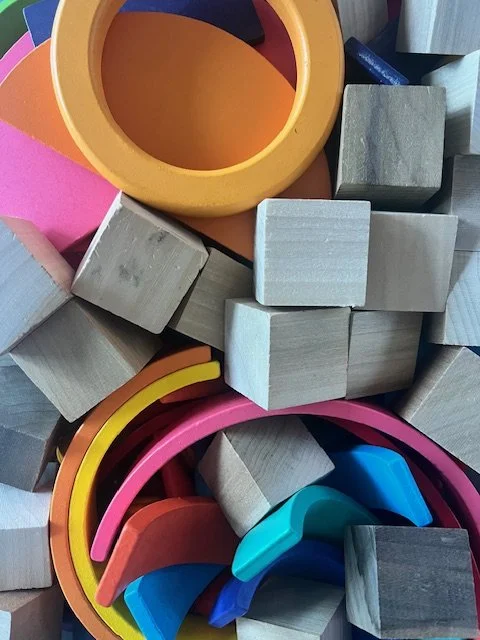
Blocks
Cars or figurines
Art supplies (I always keep washable paint, construction paper, glue, and makers handy)
One sensory bin (Our Hop Into Spring Play Kit sparks imagination, fine motor skills, and more)
One gross motor item (balls, stepping stones, even pillows or big stuffies can engage whole body movement)
When options decrease, imagination increases.
Children naturally:
Problem solve longer
Engage in deeper pretend play
Strengthen executive functioning skills
Build frustration tolerance
Less truly becomes more.
Refresh Your Expectations of Play
Spring isn’t just about cleaning physical spaces. It’s about releasing unrealistic expectations too.
Play does not have to be:
Pinterest-perfect
Aesthetic (I love an aesthetic appeal, but my kid could care less and that’s who matters)
Elaborate (Less is more)
Time-consuming
In fact, research in early childhood development shows that simple, open-ended play builds stronger neural pathways than structured, adult-directed activities.
Your child does not need a themed craft every day.
They need:
Repetition
Movement
Sensory experiences
Connection
Even 10 minutes of fully present, phone-free interaction can significantly strengthen attachment and emotional security.
And here’s something we remind families in our classes often:
Independent play is learned — not automatic.
It grows when children feel secure, not entertained.
What’s Actually Happening in the Brain During Play?
Because play is preparation.
Not just for school — but for life.
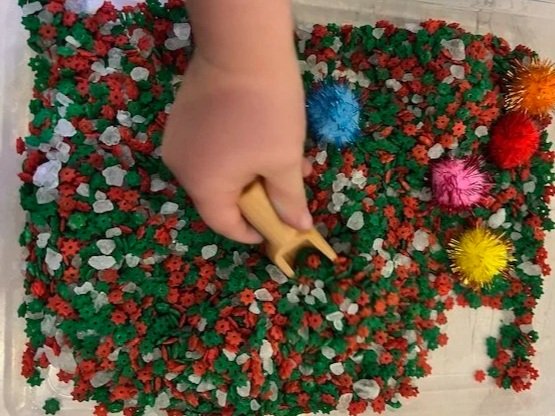
When your toddler dumps, scoops, stacks, and repeats they aren’t “just making a mess.”
They are:
Building fine motor strength for future writing
Developing bilateral coordination, strengthen the connection between the left and right brain
Strengthening neural pathways through repetition
Learning cause and effect
Practicing emotional regulation
Open-ended materials like rice bins, water play, and loose parts stimulate multiple areas of the brain at once.
This is why at Happy Baby Social Nest, our classes are intentionally designed to support whole-child development through purposeful play.
3 Simple Spring Play Ideas (Low Prep, High Impact)
You don’t need to run to the store.
Here are three easy, developmentally supportive ideas:
1. Nature Scoop Bin (Or save yourself the prep and use our Hop Into Spring Play Kit)
Fill a container with:
Dried beans or rice
Measuring cups
Spoons
Silk flowers or collected leaves
Supports:
Fine motor development
Early math concepts (volume, measurement)
Focus and concentration
2. Flower Water Station
Add:
A bowl of water
Plastic cups
Ladles or droppers
Floating flowers or petals, real or fake
Supports:
Sensory regulation
Hand strength
Calm, repetitive movement
Water play is especially powerful for emotional regulation.
3. Outdoor Color Hunt
Take a short walk and ask your child to find:
Something green
Something yellow
Something soft
Something tiny
Supports:
Vocabulary growth
Observation skills
Mindfulness
Connection to nature
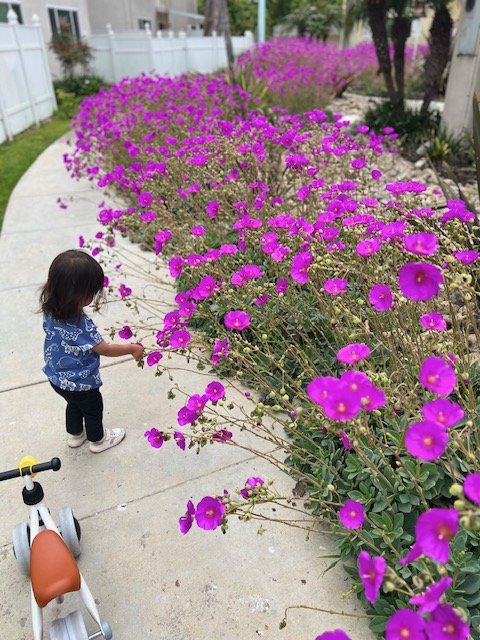
And bonus? Fresh air regulates both of you.
Refresh Your Energy, Too
Moms, this part is for you.
Spring refresh isn’t about adding more to your plate.
It’s about simplifying.
Let them get messy.
Let boredom happen.
Say yes when you can.
Step outside for five minutes.
And most importantly — don’t do it alone.
Community matters.
Connection matters.
You deserve spaces that support you just as much as they support your child.
A Gentle Invitation
If this season has you craving a reset, a calmer home, deeper connection, more intentional play would love to welcome you.
At Happy Baby Social Nest, we create safe, supportive environments where children explore freely and caregivers feel encouraged, not judged.
Because when we refresh play, we refresh everything.
Spring is here.
Let’s grow together.